WHOOP for Weight Loss in 2025 – Can Recovery Tracking Help You Burn Fat?
Why Most Weight Loss Plans Fail
Ask most people how to lose weight, and the answer will sound familiar:
“Count calories. Hit 10,000 steps. Do more cardio.”
These approaches work to a point, but if they were the full answer, more people would be lean and healthy. The reality is different: millions try, and most plateau or regain weight. Why? Because they ignore the hidden factors behind fat loss — sleep quality, recovery balance, and stress control.
This is where WHOOP stands out in 2025. Unlike step counters and calorie apps, WHOOP doesn’t care how many times you walked around the block. Instead, it focuses on how your body is responding — whether you’re recovered, stressed, or burning out.
So the question is simple:
Can WHOOP really help you lose weight in 2025, or is it just another fancy tracker?
Before WHOOP – The Traditional Struggle
Think about the typical weight loss journey:
- You start counting calories, but constant tracking becomes exhausting.
- You push harder in the gym, only to feel tired, sore, and unmotivated.
- You get frustrated when the scale doesn’t move even though you’re “doing everything right.”
What’s missing in this cycle? Recovery.
Without proper recovery, your body raises stress hormones like cortisol, which makes it harder to burn fat and easier to store it. Poor sleep disrupts hunger signals, pushing you toward overeating. Overtraining slows progress instead of speeding it up.
This is why so many people hit a wall — and why WHOOP approaches weight loss differently. Instead of obsessing over calorie math, WHOOP teaches you to train smarter, sleep better, and align daily habits with your fat loss goals.
The Science – Recovery, HRV, and Fat Loss
If weight loss were just about eating less and moving more, the job would be simple. But your body is not a calculator — it’s a living system where sleep, stress, and recovery drive how efficiently you burn fat.
1. Recovery and Hormones
When you don’t recover well, stress hormones like cortisol stay elevated. Cortisol makes you hold onto fat, especially around the midsection, and increases cravings for sugar and high-calorie foods. That’s why even a “perfect diet” can fail if your recovery is poor.
2. HRV – The Stress and Readiness Marker
WHOOP uses heart rate variability (HRV) as one of its most important metrics. HRV is the gap between heartbeats, and it reflects how well your nervous system is balancing stress and recovery.
- High HRV = your body is adapting, ready to train, and more likely to burn fat effectively.
- Low HRV = your body is stressed, recovery is poor, and fat loss may stall.
3. Sleep Quality and Metabolism
Fat loss is tied directly to sleep. Research shows that poor sleep reduces leptin (the “I’m full” hormone) and raises ghrelin (the hunger hormone). Translation: you eat more when you’re tired, and your metabolism slows. WHOOP’s Sleep Coach helps you optimize sleep duration and timing so your body is primed for fat burning.
4. Why Steps and Calories Alone Aren’t Enough
Counting steps or tracking calories tells you what you’re doing. But recovery and HRV tell you how your body is responding. That’s the key difference. WHOOP goes deeper, showing whether your lifestyle and workouts are actually pushing you toward fat loss or keeping you stuck.
How WHOOP Helps With Weight Loss
WHOOP isn’t designed to count steps or track every bite of food. Instead, it focuses on the drivers of sustainable fat loss — recovery, sleep, and daily habits. Here’s how:
1. Strain Score – Train Smarter, Burn Smarter
- WHOOP calculates a Strain Score, which measures the cardiovascular load from workouts and daily activities.
- Instead of pushing you to burn more calories endlessly, it shows when you’ve done enough for meaningful progress.
- For fat loss, this prevents overtraining (which raises cortisol and stalls results) and helps you balance workout intensity with recovery.
Practical Example: You may think running 6 days a week will speed up fat loss. WHOOP might show your recovery is low after day 3, meaning your body will actually store fat and break down muscle if you keep pushing.
2. Recovery Score – Know When to Rest or Push
- WHOOP uses HRV, resting heart rate, and sleep to give you a daily Recovery Score.
- Color-coded zones (green, yellow, red) make it easy to understand:
- Green: body is primed → train harder, burn more.
- Yellow: body is okay → moderate activity.
- Red: body is stressed → focus on rest, light movement, and recovery.
- This helps avoid burnout, which is one of the biggest reasons people fail at fat loss.
3. Sleep Coach – Fix the Fat Loss Hormones
- WHOOP tracks your sleep stages (light, deep, REM) and disturbances.
- Its Sleep Coach tells you exactly how long to sleep and when to go to bed to recover fully.
- Better sleep = better hormone balance = more fat loss.
Science Link: Poor sleep reduces leptin and raises ghrelin → you feel hungrier and store more fat. WHOOP’s sleep coaching helps reverse this.
4. Behavior Journal – Spot Hidden Weight Loss Killers
- WHOOP lets you log daily behaviors like:
- Alcohol intake
- Caffeine consumption
- Late-night meals
- Stress levels
- Over time, WHOOP shows how these habits affect your recovery and fat-loss progress.
Practical Example: You may notice that late-night snacking drops your recovery by 20% the next day. That direct feedback makes it easier to break bad habits.
WHOOP vs Other Trackers for Weight Loss
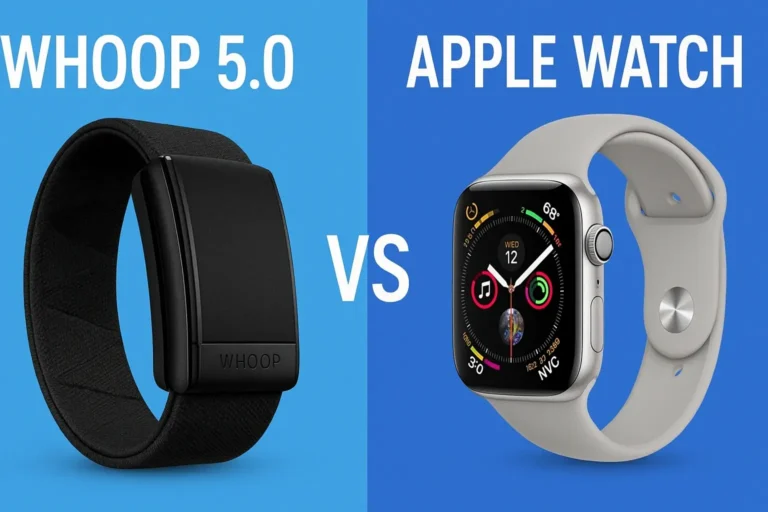
When people think about losing weight with wearables, they usually turn to step counters and calorie trackers like Fitbit, Apple Watch, or Xiaomi Bands. These devices give you an immediate sense of how much you’ve moved and roughly how many calories you’ve burned. But does that really drive fat loss? Let’s break it down.
Fitbit and Apple Watch – Steps and Calories First
- Strengths: Count steps, track calories, activity rings, workout logs.
- Weaknesses: They don’t measure recovery depth, HRV trends, or how lifestyle habits affect fat loss.
- Result for Weight Loss: Great for accountability (“I walked 10k steps”), but limited in explaining why your body isn’t burning fat despite activity.
Xiaomi Smart Band – Budget-Friendly Basics
- Strengths: Very cheap, tracks steps, heart rate, and basic sleep.
- Weaknesses: No recovery tracking, shallow sleep insights, no strain or lifestyle correlation.
- Result for Weight Loss: Fine for casual users who want motivation, but doesn’t solve long-term plateaus.
WHOOP – Recovery and Habits First
- Strengths: Tracks recovery (HRV, RHR, sleep), strain (cardio load), and lifestyle impacts.
- Weaknesses: Doesn’t count steps or log food — you’ll need an external app for nutrition.
- Result for Weight Loss: Helps you avoid the cycle of overtraining, stress eating, and burnout by showing you when your body is primed to burn fat.
Key Difference: Activity vs Adaptation
- Fitbit/Apple/Xiaomi = focus on what you did (steps, calories, workouts).
- WHOOP = focus on how your body adapted (recovery, sleep, HRV, habits).
For short-term motivation, a step counter works fine. But for sustainable fat loss, WHOOP’s recovery-first approach provides deeper insights into why you may succeed or stall.
WHOOP in Real Life – Stories of Transformation
Numbers and features are one thing, but what matters most is how WHOOP actually impacts people trying to lose weight. Here are some examples of how users have applied WHOOP’s recovery-first approach to their fat-loss journey:
Case 1: The Overtrained Gym-Goer
- Before WHOOP: A 34-year-old man training 6 days a week, cutting calories hard, and frustrated because the scale wasn’t moving. He felt constantly tired and sore.
- With WHOOP: His recovery scores showed he was constantly in the red zone. He realized he was overtraining, which was keeping cortisol high and slowing fat loss.
- Result: By adding two active recovery days and improving sleep, he started dropping fat steadily while actually training less.
Case 2: The Busy Professional
- Before WHOOP: A 40-year-old woman balancing work, family, and a diet plan. She tried to run daily, but late-night emails and poor sleep kept her weight stuck.
- With WHOOP: The Sleep Coach showed she was sleeping 5–6 hours when her body needed 8+. She also noticed alcohol on weekends dropped recovery by 25%.
- Result: By fixing her sleep schedule and reducing alcohol, her energy improved and fat loss accelerated without changing her workouts.
Case 3: The Beginner Trying to Stay Consistent
- Before WHOOP: A 28-year-old beginner who always started strong but quit after a few weeks. He burned out and lost motivation.
- With WHOOP: The Recovery Score gave him simple daily guidance: train harder when green, stay light when red. This helped him avoid the “all-or-nothing” trap.
- Result: He stuck with training for 90 days straight and lost 8 kg — something he had never done before.
What WHOOP Can’t Do (Limitations)
WHOOP is powerful for weight loss, but it’s not a magic bullet. To set the right expectations, here are the key limitations you should know before deciding if it’s right for you:
1. No Food Tracking
- WHOOP does not track calories eaten or log your meals.
- For fat loss, nutrition is still the biggest driver — and you’ll need a separate app (like MyFitnessPal or Cronometer) to handle calorie tracking.
- WHOOP helps you understand how those meals affect recovery, but it won’t tell you if you’re in a deficit.
2. No Step Counting
- Unlike Fitbit, Apple Watch, or Xiaomi bands, WHOOP doesn’t count steps.
- If your motivation depends on hitting 10,000 steps daily, WHOOP won’t scratch that itch.
- Instead, it focuses on strain, which is more meaningful but less “gamified.”
3. Requires a Subscription
- WHOOP’s model is device + monthly membership ($30–$40/month).
- Over time, it becomes more expensive than most fitness trackers.
- This cost makes sense for athletes or serious users but may feel excessive if your main goal is casual weight loss.
4. No Screen or Smartwatch Features
- WHOOP has no display, no notifications, no watch faces.
- It’s not designed to replace your smartwatch.
- If you want texts on your wrist or music controls, WHOOP won’t give you that.
5. Data Without Action Can Be Overwhelming
- WHOOP gives detailed recovery and sleep insights, but you still need discipline to act on them.
- If you ignore the feedback (like staying up late or overtraining), WHOOP won’t stop you — it just shows the data.
Bottom Line:
WHOOP is excellent at coaching recovery and lifestyle habits, but it won’t:
- Count calories for you
- Track steps
- Replace a smartwatch
- Work without commitment
For weight loss, it’s best used as a companion tool alongside proper nutrition tracking and exercise.
Best Way to Use WHOOP for Fat Loss in 2025
WHOOP won’t burn fat for you. But if you use its tools correctly, it can become a powerful weight-loss coach. Here’s how to get the most out of it:
1. Pair WHOOP With a Nutrition Tracker
- Use WHOOP for recovery, strain, and habit tracking.
- Use an app like MyFitnessPal, Cronometer, or LoseIt for calories and macros.
- Together, this gives you a complete picture: food intake + body response.
2. Train Smarter With Strain and Recovery
- On Green Days (high recovery): Do harder workouts (HIIT, strength, long runs).
- On Yellow Days (moderate recovery): Do steady-state cardio, moderate weights, or active recovery.
- On Red Days (low recovery): Focus on rest, stretching, walking, or yoga.
- This keeps your body burning fat without falling into the overtraining trap.
3. Use the Sleep Coach to Protect Metabolism
- Aim for the sleep duration WHOOP recommends, not just “enough sleep.”
- Prioritize deep sleep and REM — these stages are key for fat metabolism and hormone regulation.
- Example: WHOOP might suggest you need 8.5 hours after a tough training day, not your usual 6.5.
4. Audit Your Lifestyle With the Behavior Journal
- Log caffeine, alcohol, late meals, travel, or stress.
- After a few weeks, look for patterns:
- Alcohol drops recovery by 20% the next day.
- Late meals reduce sleep efficiency.
- Caffeine too late in the day kills deep sleep.
- Small habit adjustments here accelerate fat loss more than most workouts.
5. Stay Consistent With Accountability
- WHOOP gives you daily data and reminders that keep you engaged.
- Even if the scale isn’t moving, you’ll see recovery, sleep, and HRV improving — which motivates you to stay on track.
Practical Fat Loss Formula With WHOOP in 2025:
- Track food in a nutrition app.
- Use WHOOP to balance workouts with recovery.
- Sleep as much as WHOOP recommends.
- Eliminate habits that hurt recovery.
- Stay consistent → fat loss follows.
FAQ – WHOOP and Weight Loss
1. Does WHOOP track calories burned?
Yes, WHOOP estimates calories burned using heart rate, strain, and activity levels. However, it doesn’t log food intake, so you’ll need a nutrition app for calorie balance.
2. Can WHOOP replace a food-tracking app like MyFitnessPal?
No. WHOOP doesn’t track meals or macros. It’s best used alongside a food-tracking app. Think of WHOOP as your body response coach, not your diet log.
3. Is WHOOP accurate for weight loss?
WHOOP is accurate for recovery, HRV, and sleep, which directly affect fat loss. But weight loss depends on being in a calorie deficit — something WHOOP doesn’t measure directly. It’s a support tool, not the full solution.
4. How does WHOOP’s sleep tracking help with fat loss?
Poor sleep increases hunger hormones and slows metabolism. WHOOP’s Sleep Coach helps you improve sleep quality, which makes it easier to stay in a calorie deficit and burn fat.
5. WHOOP vs Fitbit for weight loss — which one is better?
- Fitbit/Apple/Xiaomi: Good for counting steps and tracking food.
- WHOOP: Better for recovery, sleep, and lifestyle coaching.
- Best approach: If you’re serious about fat loss, use WHOOP with a calorie app. If you want simple motivation, Fitbit is enough.
6. Is WHOOP worth it if my main goal is fat loss?
If you’re only looking to count steps and track calories, WHOOP is overkill. But if you want to improve sleep, reduce stress, and stay consistent — the areas where most diets fail — WHOOP can be a game-changer for weight loss.
Final Verdict – WHOOP as a Fat Loss Partner
WHOOP will not magically burn fat for you. It won’t count every step, log your meals, or spoon-feed you a diet plan. But here’s what it will do — and why it matters for weight loss:
- It will teach you when your body is primed to burn fat (recovery score).
- It will stop you from overtraining (strain balance).
- It will fix your sleep so your metabolism works the way it should.
- It will expose lifestyle habits that sabotage fat loss.
If your goal is long-term, sustainable fat loss, WHOOP is more than a tracker. It’s a coaching tool that makes your workouts, diet, and lifestyle work together instead of against you.
Verdict:
- For casual weight loss → Fitbit, Apple Watch, or Xiaomi are cheaper and easier.
- For sustainable fat loss with science-driven guidance → WHOOP is worth the investment.
Start Losing Fat Smarter With WHOOP
If you’re ready to move beyond calorie math and step goals, WHOOP can help you track the deeper factors — sleep, recovery, and habits — that make fat loss actually stick.
Check the latest WHOOP 5.0 and MG bundles here:
https://join.whoop.com/DISCOUNT_OFFER/